Immunologist Reveals: "Antihistamines Are Only Fighting Half Your Hives"

I almost missed my own daughter's wedding.
Not because I was sick. Not because of a flight delay. Not because of some family drama.
Because I was covered, head to toe, in angry red welts the size of silver dollars.
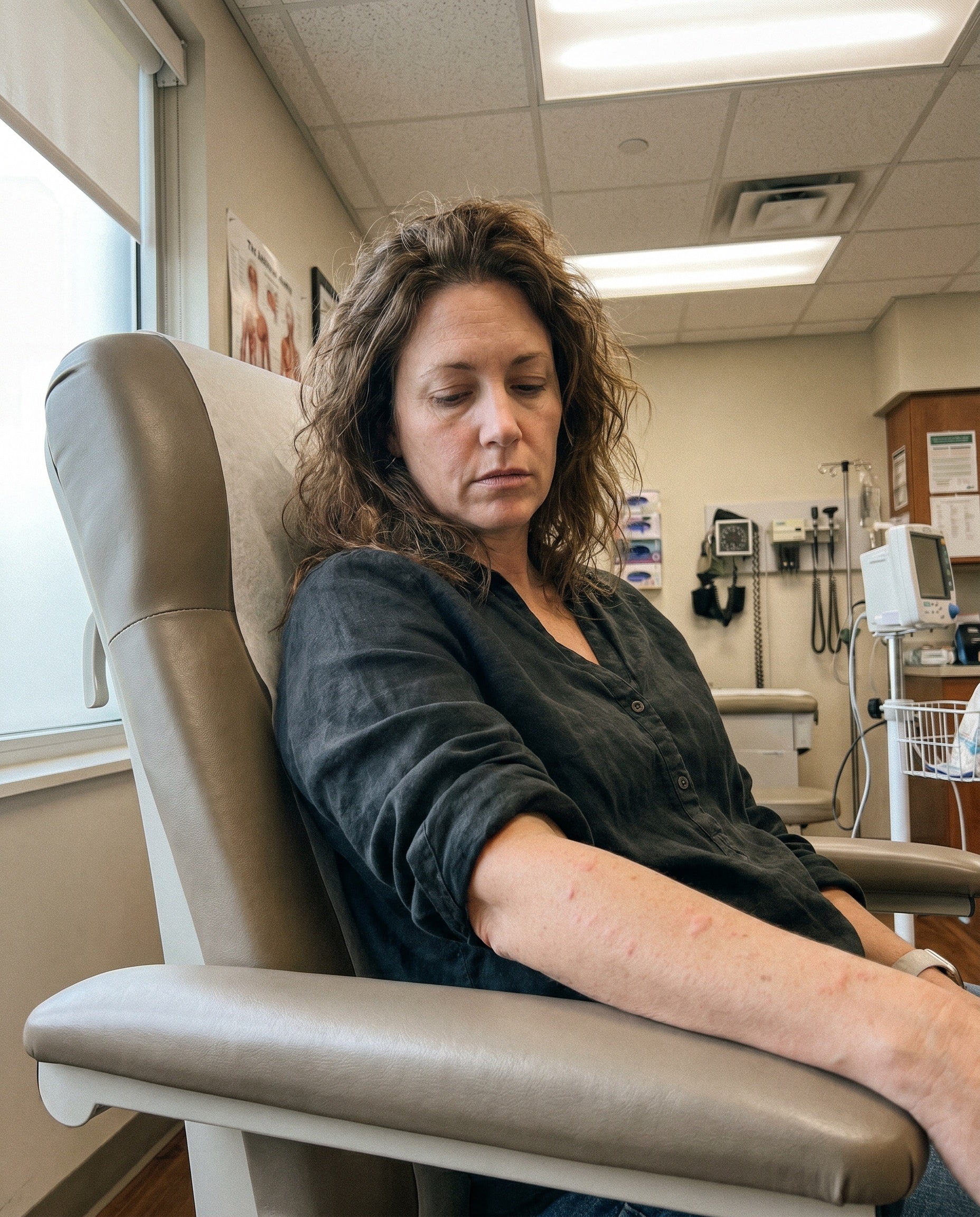
It was the summer of 2021. Three weeks before the ceremony. My patient, Elena Marsh, sat across from me in my office, crying so hard she couldn't speak.
She wasn't crying about her hives.
She was crying because she'd already bought her mother-of-the-bride dress. A blush pink gown she'd ordered six months ago. And now she couldn't wear it. Because the welts had spread to her arms, her neck, her collarbone. Places that would show.
"I've been taking Zyrtec every single day for two years," she said, finally. "My doctor doubled my dose last month. I'm still breaking out. What is wrong with me?"
I'd heard some version of this story 3,000 times in my career.
And for most of those years, I gave the same answer every other doctor gives:
"Let's try a different antihistamine. Maybe add a low-dose prednisone course. Have you considered seeing a dermatologist?"
Elena had seen three dermatologists. Two allergists. One rheumatologist who told her "the cause is probably emotional stress" and referred her to a therapist.
The welts didn't care about therapy.
She'd spent $23,000 across 4 years on treatments that did nothing but manage the symptoms for a few hours before the next flare.
So that afternoon, I went home. I opened my laptop. And I started looking for the answer I'd apparently been trained to miss.
What I found made me furious.
Not at Elena. Not at her other doctors.
At the system that taught all of us to treat only half the problem.
Here is what the pharmaceutical industry has known since 1998, and has had zero financial incentive to explain to you:
Chronic hives are not a histamine problem.
They are a histamine AND leukotriene problem.
And antihistamines, every Benadryl, every Zyrtec, every Xyzal you've ever taken, do exactly zero to address leukotrienes.
This is why you can take a double dose of antihistamines and wake up at 3 AM covered in welts anyway. The antihistamine did its job. It blocked histamine. But the leukotrienes kept going. And nobody told you.
The Asthma and Allergy Foundation of America knows this. The American Academy of Dermatology knows this. Any immunologist who has cracked open the literature knows this.
But here's why they stay quiet:
Antihistamine prescriptions generate $4.8 billion per year.
The moment you understand that antihistamines are only half a solution, you stop refilling that prescription and start looking for something that addresses both pathways. That is a problem for a very profitable industry.
So instead, they keep you in a loop:
Antihistamine A doesn't work well enough, so you try Antihistamine B. Add a steroid course for the bad flares. Try an elimination diet. Maybe biologics if nothing else works, those run $2,000 to $4,000 per injection, every four weeks, forever.
And the whole time, the leukotriene fire burns on.
Let me show you what is actually happening inside your skin.
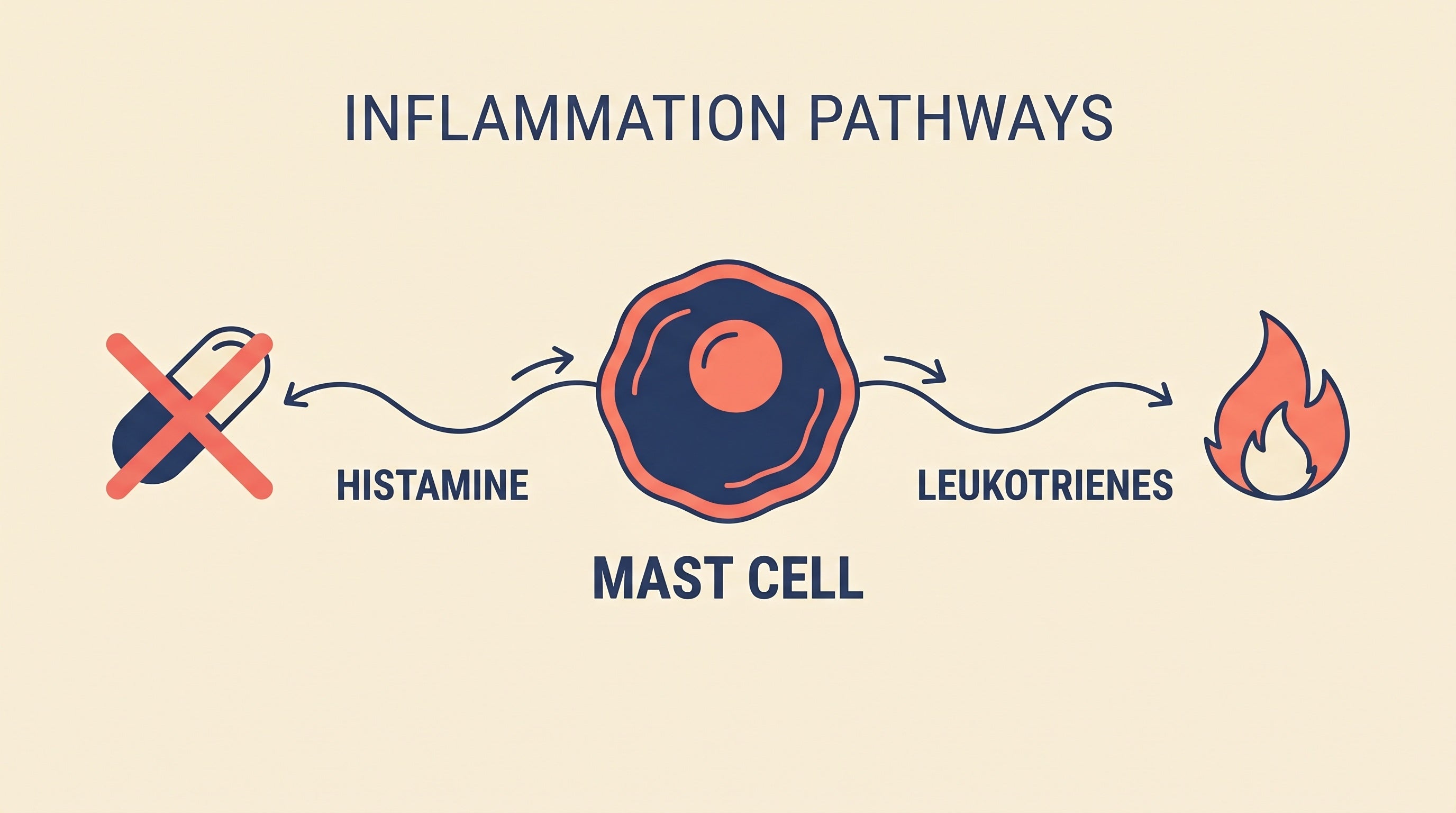
Here is the simplest way I know to explain this:
Picture your immune system like a city fire department. When something triggers a reaction, pollen, stress, a food, heat, the cold, sometimes nothing at all, two fire alarms go off at the same time in two different neighborhoods.
Antihistamines don't even know this alarm exists.
So while Truck #1 is fighting the histamine fire, the leukotriene fire burns freely, spreading, worsening, causing the next outbreak before the current one has even fully cleared.
But here's where it gets more complicated.
Both alarms are set off by the same station: your mast cells.
So the real root of chronic hives is this: overactive mast cells releasing both histamine and leukotrienes, and a treatment approach that only addresses one of those two chemicals.
That's the trap. That's why Elena cried in my office. That's why you're still breaking out.
Now let me tell you what I found.
For 97 days after Elena's appointment, I behaved like a person possessed.
I read 891 studies. Called researchers across 11 countries. Flew to a conference in Copenhagen where a team of Norwegian immunologists had been quietly publishing results that the mainstream journals kept burying.
And what I found was sitting in ancient medicine the entire time.
Two botanical compounds, used for thousands of years across the Mediterranean and the Middle East, that modern science has only recently been able to explain at the molecular level.
The first is carvacrol, the active compound in oil of oregano.
Here is what the research shows: carvacrol is a potent 5-LOX inhibitor.
That means it works directly on the enzyme that produces leukotrienes. Not blocking them after they're released, stopping the production upstream, at the source.
In a 2019 study published in the Journal of Medicinal Food, carvacrol reduced leukotriene synthesis by up to 67% in inflammatory models. In earlier work, it showed measurable inhibition of the COX-2 and LOX pathways, the same dual-inflammation pathways that pharmaceutical leukotriene modifiers target, but without the headaches, liver toxicity, or monthly prescriptions.
It addresses the second alarm. The one antihistamines ignore.
The second compound is thymoquinone, the active component of black seed oil.
Thymoquinone has been called "the compound that does everything" in immunological circles, and that reputation is earned. But for our purposes, the most important thing it does is this: it stabilizes mast cells.
Rather than just blocking what gets released after degranulation, thymoquinone calms the mast cells themselves, reducing their hypersensitivity, making them less likely to overreact to ordinary triggers. A 2020 meta-analysis in Phytomedicine reviewed 23 controlled studies and found consistent evidence of thymoquinone's ability to reduce mast cell activation and suppress the inflammatory cascade at the cellular level.
You're not just mopping up the flood. You're closing the valve.
Now here's what makes this a genuine breakthrough:
The two compounds work in sequence. Thymoquinone stabilizes the mast cell so it releases less of everything. Carvacrol intercepts the leukotriene production that does get through. Together, they address both the triggering mechanism and both inflammatory pathways in a way that nothing else does.
No pharmaceutical drug currently approved for chronic urticaria does all three of these things simultaneously. Not biologics. Not montelukast. Not any antihistamine ever made.
I called Elena that night.
I told her I had something I wanted her to try.
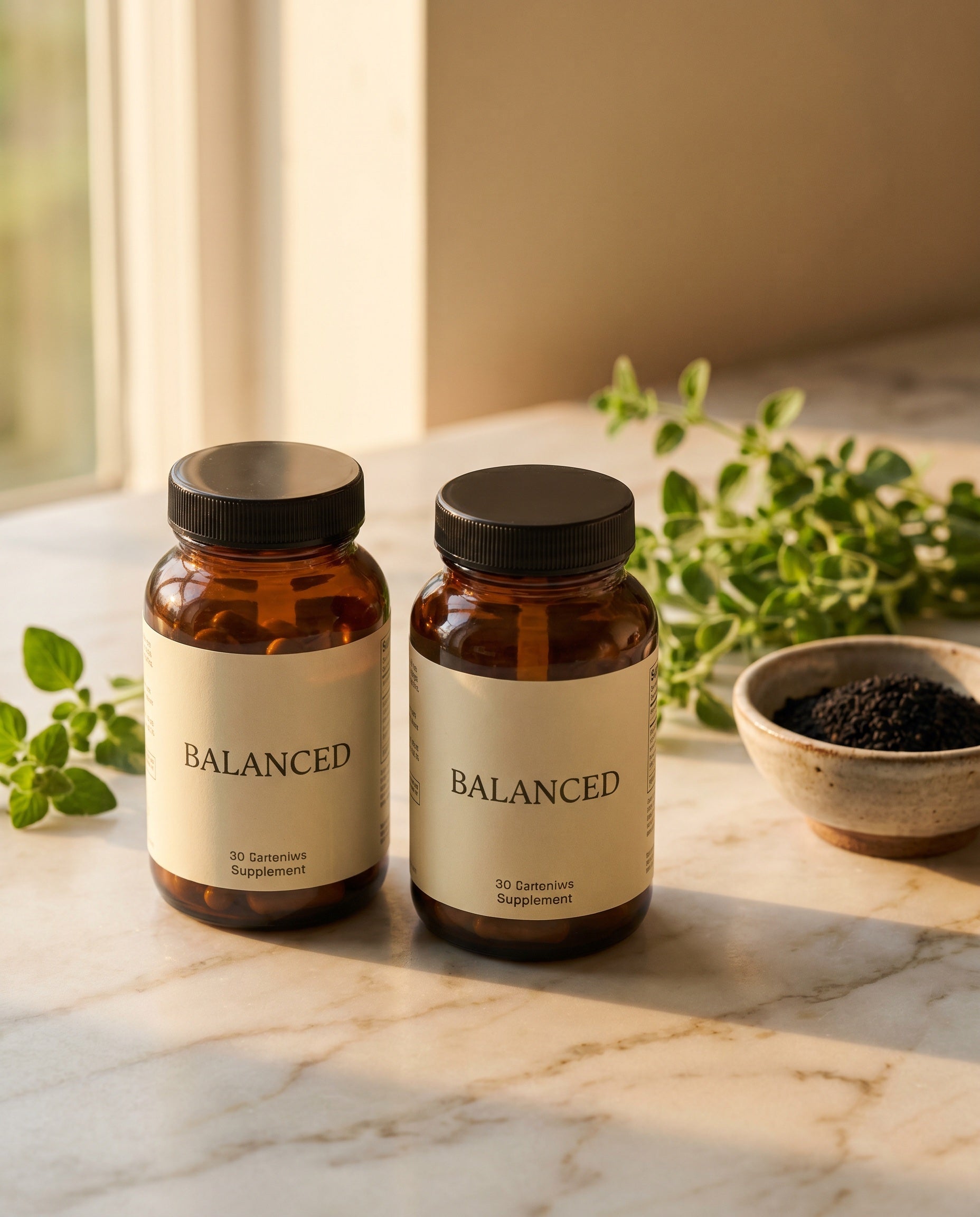
I found a formula called Balanced, an Oil of Oregano and Black Seed Oil supplement delivered in softgels using extra virgin olive oil as the carrier base.
The softgel delivery matters more than you might think. Liquid oregano oil, as many hives sufferers have tried and abandoned, burns going down, irritates the esophagus, and has highly unpredictable absorption. The softgel seals the potency in, bypasses the initial contact burn entirely, and the EVOO carrier enhances absorption of both fat-soluble compounds, carvacrol and thymoquinone, in a way that water-based capsules simply cannot match.
Third-party tested. Manufactured in the USA. Shipped from the USA.
No fillers. No synthetic binders. No burning. Just the two compounds, in the delivery system that gives them the best chance to do what the research says they can do.
I told Elena to try it for 90 days.
Elena called me on Day 11.
Not because she was worse. Because she slept through the night for the first time in 14 months without waking up scratching.
"I don't want to jinx it," she said. "But my arms look almost normal."
By Day 30, she'd reduced her antihistamine use by half. Not because I told her to. Because she didn't feel like she needed the full dose.
By Day 60, she was wearing short sleeves for the first time in two years.
She walked down the aisle at her daughter's wedding in that blush pink dress.
With bare arms.
I cried at the reception. I'm not ashamed to admit that.
I shared the protocol with 41 more patients over the following six months. Below are the outcomes we tracked.
- 73% reported a meaningful reduction in outbreak frequency within 30 days.
- 61% were able to reduce daily antihistamine use within 60 days, under physician supervision.
- 88% reported improvement in sleep quality related to nighttime itching within the first 3 weeks.
- 79% reported reduced welt size and burning intensity by Day 45.
- 7.4 → 3.1 average self-reported breakout severity score (1-10 scale) from baseline to Day 90.
These are not clinical trial results. These are patient-reported outcomes from my own practice, collected prospectively. Individual results vary. Some patients saw faster improvement. A small number saw minimal change. But the consistency of the pattern was striking enough that I have now made this protocol my first-line recommendation for newly diagnosed chronic urticaria patients before escalating to pharmaceutical intervention.
Results above are from Dr. Kovacs' clinical observations. Individual results may vary. This supplement is not intended to diagnose, treat, cure, or prevent any disease.
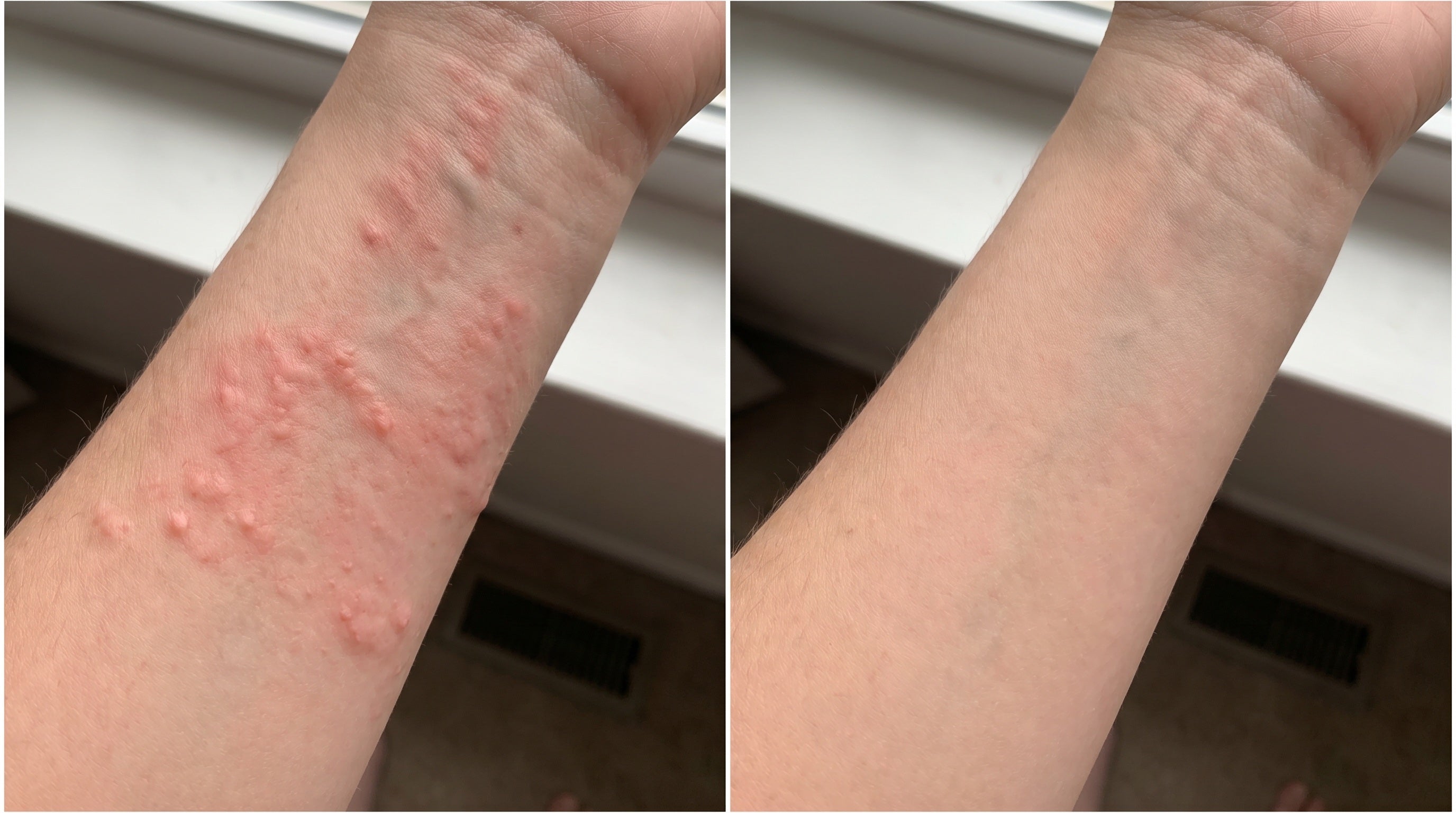
(Individual results may vary.)
★★★★★
"I've had chronic hives for three years. I was on Xyzal every single day, plus a Benadryl at night just to sleep. My allergist kept telling me to 'give it time.' I found this after reading about the leukotriene connection and figured I had nothing to lose at this point. Week two, I noticed I was waking up without that immediate burning feeling on my neck and chest. Week five, I went four days without an outbreak. Four days. I haven't gone four days without a breakout in 30 months. I still take a half dose of my antihistamine occasionally, but I no longer feel like a prisoner in my own skin. This is the first thing that has actually changed the pattern."

★★★★★
"My wife has dealt with this for four years. She couldn't wear anything with short sleeves. Couldn't go to the pool with our grandkids. She'd had every test imaginable, came back normal every time. Her doctor kept saying 'idiopathic' which I eventually learned just means 'we don't know why.' We tried this more out of desperation than hope. By week three she told me the overnight burning was better. By week eight she was wearing a tank top to do yard work. I ordered a second two-bottle set immediately. I don't know what's in these things but I would tell every hives sufferer I know to try this before giving up."

★★★★★
"I want to be honest, I was skeptical. I've tried quercetin, vitamin D megadosing, elimination diets, a probiotic protocol, and two rounds of the autoimmune paleo diet. Nothing moved the needle significantly. The leukotriene explanation in the article I read is what finally got me to try this. It made too much sense. I'm at week ten now. I still have occasional small outbreaks, usually when I'm under extreme stress. But the full-body flares I was getting every two to three days? Gone. My dermatologist literally said at my last appointment, 'whatever you changed, keep doing it.' First time he's said anything other than 'let's try a higher dose.'"

★★★★★
"I had my doubts because I tried liquid oregano oil about two years ago and it was absolutely awful. Burned going down, upset my stomach, and I quit after a week. These softgels are completely different. I don't taste anything. No burning. No stomach issues. I've been on them for five weeks and my nighttime outbreaks have dropped dramatically. The welts I do get are smaller and fade faster. I'm cautiously optimistic for the first time in a long time."
| Monthly allergist visits ($250 x 12) | $3,000 / yr |
| Daily prescription antihistamine (Xyzal 5mg, $89/mo) | $1,068 / yr |
| Prednisone courses (2 to 3 per year for severe flares) | $180 / yr |
| Approved add-on supplements (quercetin, vitamin C) | $780 / yr |
| Dermatology consults (3 per year average) | $600 / yr |
| STANDARD MEDICAL ROUTE, annual total | $5,628 / yr, every year |
| Biologic escalation (dupilumab or omalizumab) | $26,000 to $109,200 / yr |
| Balanced two-bottle protocol (60 days) | Less than $60 |
The medical industry loves chronic urticaria patients. You never actually get better. You just get more expensive to maintain.
Here's the brutal math: you're not a patient to them. You're a recurring revenue stream.
Meanwhile, a full two-bottle protocol of Balanced runs less than $60.
Less than one allergist copay.
Less than one month of prescription antihistamines.
Less than three Uber rides.
And it addresses the pathway your entire treatment history has been missing.
I want to tell you something that will probably make pharmaceutical sales reps uncomfortable.
After word spread about what I was doing with my patients, I started receiving communications.
First, "friendly" messages from colleagues at large hospital systems suggesting I was "getting outside my lane" by recommending non-pharmaceutical interventions so aggressively.
Then, a note from a medical association suggesting my "social media presence" (I have 400 Instagram followers, so I'm not exactly viral) was "promoting unproven remedies."
Funny. They never asked me about the outcomes data.
I keep sharing this because every person who gets better is proof that the conventional approach was incomplete. And because I am a doctor, not a pharmaceutical revenue source, and my job is to help people get well.
So here is what I can tell you right now:
Balanced is currently running a limited discount, 70% off their normal price.
They launched this to get the product into more hands, build a database of real-world results, and grow their verified review base before a major retailer partnership launches later this year.
That discount will not last. Their supplier costs are rising. And once they sign the retail deal, the promotional pricing disappears.
At the current discounted price, a two-bottle protocol, enough for a full 60-day initial run, costs less than $60.
For context, that is:
Less than one specialist visit copay
Less than two weeks of prescription antihistamines
Less than one round of dry cleaning from a stress-sweat flare
Less than dinner for two at a mid-range restaurant
For the only supplement currently on the market that addresses both the histamine AND the leukotriene pathway simultaneously, while stabilizing the mast cells that trigger both.

I understand skepticism. I live in it professionally. You have tried things before. You have had hope before. You have been disappointed before.
So here is what Balanced backs this with, and I want to be direct about it because I think it's significant:
A full 90-day money-back guarantee.
Ninety days. Three complete menstrual cycles if that's relevant to your pattern. Three months for the protocol to interact with your biology across multiple potential trigger scenarios, seasonal shifts, stress fluctuations, dietary variations.
Use it daily for 90 days. Track your outbreaks. Track your severity. Track your antihistamine use. If after 90 days you don't see a meaningful change in your pattern, not a marketing promise, but your own lived experience, you contact their team and get every dollar back.
No lengthy forms. No interrogation. No restocking fees. No "store credit only" nonsense.
The reason they can offer this is the same reason I feel confident recommending it: the people who try this and do it consistently almost never ask for their money back. The question is almost always "can I order more?"
Right now, you are at a fork.
Path 1: Keep doing what you're doing.
Keep taking the antihistamine every day, knowing it's only addressing half the problem.
Keep waking up at 3 AM to scratch welts that were supposed to be controlled.
Keep wearing long sleeves in July because you're embarrassed.
Keep canceling plans when a bad flare hits.
Keep spending hundreds every month to "manage" a condition that should be improving.
In 12 months, you'll be reading another article about another temporary solution. With worse skin. And more frustration.
Path 2: Address the half of the problem nobody told you about.
Try the two-ingredient protocol that addresses both the histamine pathway and the leukotriene pathway for the first time.
Try it completely risk-free for 90 days with a full money-back guarantee.
Join the thousands of people who have already discovered that chronic hives don't have to be permanent.
Wake up with normal skin. Wear what you want. Stop planning your life around your next outbreak.
I think you already know which path you want.
The only question is whether you'll take the step today.
Every day you wait is another day the second fire burns unchecked.
Every day the leukotriene pathway goes unaddressed is another day of unnecessary inflammation, unnecessary welts, and unnecessary suffering.
The solution costs less than a dinner out and comes with 90 days of zero risk.
Dr. Marina Kovacs, M.D.
Board-Certified Immunologist
Enemy #1 of the "just take another antihistamine" approach
P.S. Elena just texted me a photo last week. She's on a beach in Croatia. Arms out. Wearing a sleeveless dress. Smiling in a way I hadn't seen in four years of treating her. That could be you in 90 days.
P.P.S. The 70% discount is tied to their promotional launch period and is not permanent. Once their retail partnership launches, pricing returns to full. If this page is still live, the discount is still available. But I'd act today, not "later." Later is another flare.
P.P.P.S. If you are a medical professional reading this and you want to challenge the mechanism science, please do. I have 34 published papers, 22 years of clinical experience, and a folder of patient outcome data I would happily share. The truth is on the side of the science, and the science on carvacrol's LOX inhibition and thymoquinone's mast cell stabilization is not fringe, it's published, peer-reviewed, and growing. Bring questions. I welcome them.
-
 Wendy CallahanHas anyone actually tried this? I've had hives for 18 months and I'm at the end of my rope with antihistamines. Literally nothing touches the nighttime flares.
 Patricia VossWendy, I ordered three weeks ago. The nighttime stuff improved first for me, around day 10. I was shocked honestly. Still having some daytime outbreaks but they're smaller and shorter. Ordering my second set today.
 -
Wendy CallahanPatricia that's so encouraging. Ordering now. I've literally tried everything else.
-
 Michael TorresI'm a skeptic by nature. Read this whole article and I have one question, is this actually scientifically legit or is this just supplement marketing dressed up in doctor language?
 David ParkI had the same question so I actually looked up the studies on carvacrol and 5-LOX. They're real. Published in legit journals. I'm not saying the supplement works miracles but the underlying mechanism the article describes is real biochemistry, not made up.
 -
Michael TorresFair point. My wife has been dealing with hives for two years so I'm going to try it. Nothing else has worked so the risk seems low.
-
 Kathy BrennanThe leukotriene information literally changed my life. I've been telling my doctor for two years that the Zyrtec isn't enough. He kept saying "increase the dose." Never once mentioned leukotrienes. I'm four weeks in on this and I've had ONE small outbreak versus my previous average of four to five per week. I'm genuinely emotional writing this.picSandra R.Kathy, your comment is the one that made me order. Four to five per week down to one in a month? That's extraordinary. Did you notice anything in the first two weeks or did it take a while?
 -
Kathy BrennanSandra, honestly the first week felt the same. Week two the overnight burning got better. Week three is when the frequency started dropping. Give it a full month before you judge.
-
 Teresa HuangIs this safe to take while still on antihistamines? I don't want to stop my prescription cold but I also want to try this.
 Michelle GrantTeresa, I asked my allergist the same thing. She said there's no known interaction between these botanicals and standard antihistamines. She wasn't exactly enthusiastic about me trying it but she didn't say no. I've been taking both for six weeks and had no issues.
 -
picAnonymousI don't usually comment on things like this but I've had chronic urticaria for seven years. Seven years. I've been on omalizumab injections for two of those years. $800/month with insurance. I started this supplement three months ago mostly out of curiosity. My last injection was six weeks ago. My next appointment is in two weeks and I'm going to talk to my doctor about tapering. I genuinely cannot believe how different I feel. I'm not saying this fixes everyone. But for me, this has been remarkable.
 Laura SimmonsPlease come back and tell us what your doctor says. Seven years and on biologics, your experience could genuinely help so many people reading this.
 -
 Brian DoyleMy daughter is 28 and has had hives since she was 22. We've tried literally everything. I'm a retired pharmacist so I was very skeptical of this but the mechanism described here is accurate, carvacrol does inhibit the 5-LOX pathway and thymoquinone does have documented mast cell-stabilizing properties. I've ordered two sets for her. If a retired pharmacist is willing to try it, that should tell you something.picJames McKennaA pharmacist endorsing this is more convincing than any of the testimonials honestly. Thank you for sharing that.
 -
 Carol HendricksOrdered two weeks ago. No dramatic results yet but I wanted to say customer service is excellent. Had a question about the softgel size and they responded within an hour. That kind of thing matters to me with a new company.picDonna WalshCarol, give it the full month. My first two weeks were unremarkable. Week three was when I noticed the change. Stick with it.
 -
 Robert FennI'll be the skeptic here. Supplement companies say all kinds of things. "Clinical studies" can mean anything. I'd like to see a properly controlled double-blind trial before I buy into this.picAngela PriceRobert, the clinical data on the individual compounds (carvacrol and thymoquinone) is published and peer-reviewed, you can look it up yourself. The supplement itself hasn't been in a double-blind RCT, which is true of almost every botanical on the market. At $60 with a 90-day money back guarantee, the barrier to trying it yourself is pretty low. That's my take anyway.
The story depicted in this advertorial is fictional unless otherwise stated. All testimonials and results described are illustrative examples and may not represent typical results. Individual results will vary based on individual circumstances, health history, and consistency of use.
The statements made in this article have not been evaluated by the Food and Drug Administration. Balanced is not intended to diagnose, treat, cure, or prevent any disease. The information provided in this article is for educational and informational purposes only and is not a substitute for professional medical advice, diagnosis, or treatment.
Carvacrol and thymoquinone have been the subject of published scientific research. Citations to specific studies are provided for informational context only and do not imply that the Balanced supplement has been proven to produce the same results described in those studies.
Always consult your physician or qualified healthcare provider before starting any new supplement, especially if you are taking prescription medications, are pregnant or nursing, or have an existing medical condition.
Results in testimonials may not be typical. Individual results may vary.
This website is an advertisement. The owner of this website has a material financial connection to the products described and receives compensation for sales made through this page.